
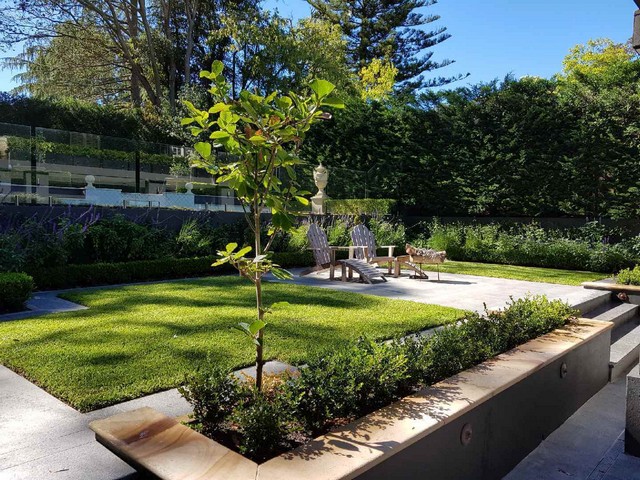
Let’s be honest about something Sydney homeowners don’t say out loud often enough: most of us don’t actually want a garden that needs us. We want a garden that looks like we spend our weekends lovingly pruning roses and whispering encouragement to native grasses, when in reality we spend our weekends at the beach, at the footy, or asleep on the couch with the cricket on mute.
That’s not laziness. That’s just modern Sydney life. And it’s exactly why “low-maintenance” has become one of the most searched phrases in Australian landscaping — right up there with “why is my lawn dying” and “how much does landscaping cost Sydney,” usually typed in that order, usually at 11pm on a Sunday.
The good news is that a genuinely low-maintenance garden isn’t a compromise. Done properly, by people who actually understand Sydney’s soil, sun and stubborn clay, it can look sharper than a garden that guzzles four hours of your weekend every week. That’s the whole philosophy behind how SK Landscape approaches every backyard, courtyard and front garden we design across Sydney’s North Shore and beyond — build it smart once, and let the garden do the work from there.
This guide walks through exactly how that’s done: the plant choices, the layout tricks, the hardscaping shortcuts, and the mistakes that quietly turn a “set and forget” garden into a Saturday-morning chore list.
Why “Low-Maintenance” Doesn’t Mean “Low-Effort Design”
Here’s the myth that trips people up: low-maintenance is often mistaken for “just chuck down some gravel and a cactus.” In practice, the opposite is true. A garden that stays tidy with minimal input actually needs more thought at the design stage, not less. Every plant, surface and drainage line has to be chosen with the end result in mind — not just how it looks on day one, but how it behaves in year three, after a wet La Niña summer and a bone-dry autumn.
This is where a proper landscaping company Sydney homeowners actually trust earns its keep. Anyone can plant a garden. Fewer people can plant one that still looks intentional after eighteen months of being left mostly alone.
What Actually Makes Sydney Gardens High-Maintenance
Before fixing the problem, it helps to know why so many Sydney backyards turn into weekend hostage situations in the first place:
- The wrong plants in the wrong spot. Thirsty exotics planted in full western sun, or shade-lovers baking on a north-facing wall — both are fighting a losing battle from day one.
- Too much lawn, not enough purpose. A big open lawn looks great in the brochure photo and terrible after six weeks of mowing, edging and feeding.
- Poor drainage. Sydney’s clay-heavy soil holds water like a grudge. Waterlogged beds breed root rot, fungus and a lot of frustrated homeowners.
- No irrigation plan. Hand-watering with a hose is a part-time job nobody signed up for.
- Zero structure. Without paths, edging or defined garden beds, everything blurs into an unruly green mess within a season.
Sort these five things out at the design stage, and most of the ongoing “maintenance” simply disappears.
Start With Plants That Actually Want to Live Here
If there’s one lesson every experienced landscaper in this city learns fast, it’s that Sydney’s climate rewards plants that are already built for it. Chasing an English cottage garden or a tropical Bali resort look in a backyard that gets forty-degree westerly winds in January is a fight you’ll be having every single summer.
Native and drought-tolerant species are the backbone of most easy-care Sydney gardens for good reason:
- Westringia (native rosemary) — a hardy, hedge-friendly shrub that shrugs off dry spells and salty coastal air.
- Lomandra and dwarf varieties — brilliant for edging, driveways and that “structured but not fussy” look.
- Kangaroo paw and bottlebrush — colour and movement without demanding a drop more water than they need.
- Agave and other architectural succulents — near indestructible, and they make a front garden look considered rather than default.
Mediterranean-style planting works beautifully too, since regions like southern Europe share Sydney’s hot, dry summer pattern. Olive trees, lavender, rosemary and grasses paired with gravel paths and terracotta give a relaxed, resort-style finish that barely needs touching once established.
The trick, and it’s one our team leans on constantly, is grouping plants by water needs rather than just by how good they look together in a nursery photo. Mixed watering requirements are the number-one reason “low-maintenance” gardens quietly turn into high-maintenance ones within a year.
Cut the Lawn, Not the Style
Lawn is the single biggest time-sink in an average Sydney backyard, and it’s usually the first thing worth reconsidering. That doesn’t mean going full concrete jungle — it means being deliberate about where grass actually earns its place (kids kicking a footy, the dog’s zoomies circuit) versus where it’s just there because that’s what backyards have always had.
Smart alternatives that are gaining serious traction across Sydney’s backyard landscaping scene include:
- Quality artificial turf for high-traffic zones — no mowing, no brown patches after a heatwave, and genuinely convincing underfoot these days.
- Ground covers like native violet or dwarf mondo grass for softer, greener zones that still cut mowing right down.
- Permeable paving and gravel for paths and seating areas, which also helps with Sydney’s notorious wet-season drainage issues.
- Decking for elevated or shaded spots where grass never really thrived anyway.
Reducing lawn area by even a third can cut weekly upkeep dramatically, while giving the garden more defined “rooms” — a dining zone, a lounge zone, a green buffer — which, frankly, photographs a lot better too.
Let Mulch and Smart Irrigation Do the Heavy Lifting
If mulch isn’t already your best mate, it’s about to be. A generous 75–100mm layer of organic mulch — bark chips, sugar cane, or a native blend — locks in moisture, chokes out weeds before they get a foothold, and slowly feeds the soil as it breaks down. It’s the cheapest, lowest-effort upgrade in the entire low-maintenance playbook.
Pair that with a drip irrigation system on a timer, and watering essentially takes care of itself. Water goes straight to the root zone rather than evaporating off leaves in the midday sun, which means less waste, healthier plants, and one less thing on your Sunday to-do list. For anyone tired of dragging a hose around after work, this single change tends to be the biggest quality-of-life upgrade in the whole garden.
Hardscaping: The Unsung Hero of Easy-Care Gardens
Hardscaping doesn’t get the glamour that flowering plants do, but it does most of the actual work in keeping a garden tidy long-term. Retaining walls turn a tricky slope into usable, level zones instead of an erosion problem waiting to happen. Paved courtyards and stepping-stone paths eliminate the awkward muddy patches that always seem to form exactly where people walk. Built-in planter boxes and defined edging keep garden beds from creeping into the lawn (or vice versa) over time.
For sloped blocks — and there are plenty of them across Sydney’s North Shore — terracing with retaining walls is often the single most valuable investment a homeowner can make. It turns unusable, hard-to-mow hillside into flat, functional entertaining space, and it solves the drainage and erosion headaches that come with steep gardens.
This is really where complete landscaping solutions Australia-wide start to separate themselves from a weekend DIY job. Retaining walls, drainage, irrigation and paving all interact with each other. Get the sequencing wrong — say, paving before drainage is sorted — and you’re often redoing expensive work within a couple of years.
Small Backyard? Low-Maintenance Still Applies
Compact Sydney blocks come with their own version of this challenge. Every square metre has to pull double duty, so the low-maintenance rules just get more precise:
- Go vertical with climbers like star jasmine on a trellis or fence, adding greenery without eating into floor space.
- Layer planting by height — taller structural plants at the back, mid-height shrubs for bulk, ground covers softening the front edge.
- Use raised planter boxes for herbs and edibles, which keep soil quality controlled and weeding to a minimum.
- Zone deliberately — a small, well-defined seating nook feels far more finished than a garden trying to do everything at once.
Smaller doesn’t mean simpler to design well. If anything, tight spaces punish poor planning faster, which is exactly why professional input tends to pay for itself quickly on compact blocks.
Why DIY Low-Maintenance Gardens Often Backfire
Plenty of Sydney homeowners have a crack at these themselves, and fair play — YouTube makes it all look very doable. The catch is that a garden built without proper drainage falls, soil testing, or plant grouping tends to look great for about six months, then starts unravelling. Beds waterlog. “Drought-tolerant” plants die because they were planted in heavy clay with nowhere for water to go. Turf alternatives get patchy because the base wasn’t prepared properly underneath.
This is the gap that professional landscapers Sydney homeowners actually stick with tend to fill — not just picking nice plants, but understanding how soil, slope, drainage and sun exposure all interact on a specific block, in a specific suburb, with its own quirks. It’s the difference between a garden that needs rescuing in year two and one that just quietly keeps looking good.
Our team at SK Landscape has spent years working through exactly these patterns across Sydney properties, which is our full range of landscaping services exists — covering everything from planting design and turf alternatives through to retaining walls, paving and irrigation, so the whole project is planned as one system rather than a string of disconnected jobs.
Getting the Sequence Right (And Why It Matters)
A properly planned low-maintenance garden generally follows this order:
- Assess the site — soil type, drainage, sun and wind exposure, existing structures.
- Plan the hardscaping first — paths, retaining walls, paving and any level changes.
- Install irrigation and drainage before a single plant goes in the ground.
- Mulch and plant in water-need groups, not just aesthetic groups.
- Set up a light seasonal check-in — most low-maintenance gardens still benefit from a quick tidy-up once or twice a year, not zero attention ever.
Skipping steps, or doing them in the wrong order, is the single biggest reason “low-maintenance” projects end up costing more in the long run through rework.
The Real ROI of a Low-Maintenance Garden
There’s a practical financial side to this too. A well-designed, easy-care garden tends to hold its appeal (and its value) far longer than a high-fuss one, simply because it doesn’t rely on someone maintaining a perfect routine to keep looking good. For rental properties, busy families, or anyone who travels a fair bit, that resilience is worth more than an extra flowerbed that needs weekly attention.
It’s also, generally, a smarter spend upfront than most people expect. Getting the design and installation right the first time — proper drainage, the right plant palette, sensible hardscaping — almost always works out cheaper than a string of DIY attempts and replanting every other season.
If you’re weighing up ideas, ours and plenty of others’ thinking on this gets covered in more depth over on the SK Landscape blog, where we regularly break down specific projects, plant guides and seasonal tips for Sydney conditions.
Ready to Stop Fighting Your Garden Every Weekend?
A low-maintenance garden isn’t about giving up on a great-looking outdoor space — it’s about designing one smart enough that it doesn’t need you standing over it. Right plants, right spots, solid hardscaping, and a drainage and irrigation plan that actually works with Sydney’s climate rather than against it.
If your current backyard feels more like a second job than a place to relax, it might be time for a proper look at what’s actually possible. Get in touch with the team for a chat about your space — no pressure, no jargon, just an honest read on what would genuinely make your garden easier to live with. And for a look at how we approach projects generally, SK Landscape’s homepage has a good overview of the kind of work we do across Sydney.
FAQs
Is a low-maintenance garden actually cheaper to install than a regular one? Not always upfront — good drainage, quality irrigation and proper soil prep cost real money — but it’s almost always cheaper over three to five years once you factor in water bills, replanting failed plants, and the labour (yours or a gardener’s) that a high-maintenance garden demands ongoing.
Can an established, high-maintenance garden be converted to low-maintenance, or do I need to start from scratch? Most established gardens can be transitioned in stages rather than ripped out entirely. Swapping lawn sections for ground cover or hardscaping, adding drip irrigation to existing beds, and mulching heavily are all changes that can happen without a full teardown — though a full redesign usually gets better long-term results if the underlying drainage is already a problem.
Do native plants really need zero watering once established? Not zero, but close. Most Sydney natives need regular watering for the first six to twelve months while root systems establish, then drop right back to occasional deep watering during dry stretches. The mistake people make is treating them as fully drought-proof from day one and under-watering during establishment, which is when they’re actually most vulnerable.
Will artificial turf ruin the soil underneath or cause drainage problems? Properly installed artificial turf includes a permeable base layer specifically designed to let water drain through, so it shouldn’t cause waterlogging if installed correctly. The risk comes from cheap or rushed installs that skip proper base preparation — which is exactly the kind of shortcut that turns a low-maintenance choice into a costly redo.
How much ongoing care does a “low-maintenance” garden really need? Realistically, expect a light seasonal tidy-up — pruning, mulch top-up, a irrigation system check — maybe two to four times a year, rather than true zero-effort forever. The goal isn’t no maintenance, it’s maintenance measured in hours per year instead of hours per week.
Is now a good time of year to start a low-maintenance garden project in Sydney? Autumn and early spring tend to be the easiest windows, since plants establish root systems without the stress of peak summer heat or the wet extremes of a bad summer storm season. That said, hardscaping and irrigation work can generally start any time of year — it’s mainly the planting stage that benefits from cooler conditions.